
What Is Net Metering? Net Metering vs Net Billing, Explained With Real Numbers
What is net metering? Learn how utilities credit the solar power you export, how net billing differs, and how much each rule is worth on a typical home.
Are solar panels worth it in Texas? How buyback plans, Austin Energy and CPS rules, tax exemptions, HOA law and outages change your savings in 2026.
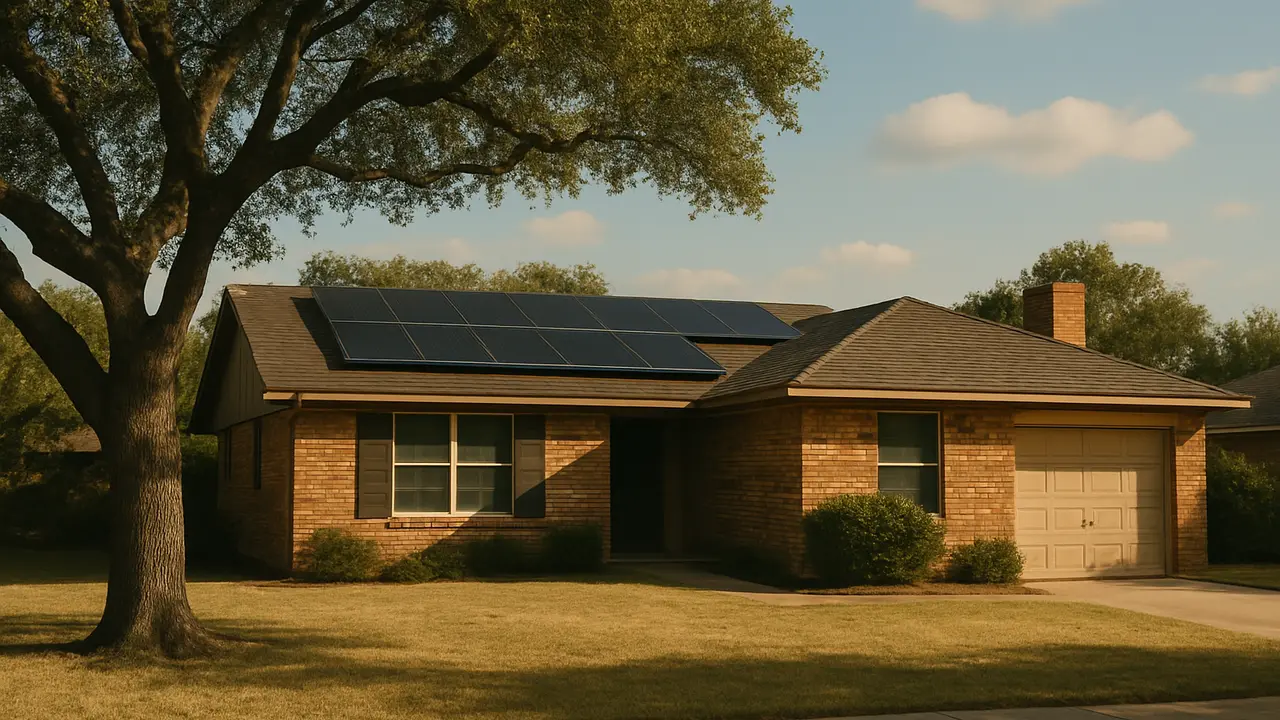
Solar panels in Texas can pay off, but savings depend less on sunshine than on who buys the power you send back. Texas has no statewide net metering, so in ERCOT's competitive market your retail provider's buyback plan sets export value, while Austin Energy and CPS Energy follow their own rules.
Texas law lets utilities and retail electric providers buy surplus solar power but does not require it. In deregulated areas, you pick a retail electric provider (REP), and some offer solar buyback plans that credit exports at rates they set. City-owned utilities and electric co-ops write their own solar credit rules.
The key text is Texas Utilities Code §39.916 (opens in a new tab). It says an electric utility or retail electric provider "may contract" with a solar owner to buy surplus electricity and credit its value. The word "may" is why buyback in Texas is voluntary. The same section requires the local wires utility to allow interconnection of a qualifying system that carries at least a 5-year warranty and fits your service capacity.
In practice there are three situations:
Because buyback is voluntary, compare any REP plan on three things: the import price you pay, the export credit you receive, and the monthly fees. A high export credit on a plan with an expensive import rate can leave you worse off. Our net metering explainer shows how export credits feed into a bill.
An 8 kW system in Houston makes about 11,368 kWh a year and, for a home using 14,400 kWh, saves roughly $822 to $1,826 in the first year depending on the export credit. With no buyback, you only save on power you use as it is produced. A buyback worth half the retail rate lifts savings to about $1,324.
Here is how we built the example. Production uses the Department of Energy's PVWatts calculator (opens in a new tab) result of 1,421 kWh per kW per year for Houston. The electricity price is Texas's average residential rate of 16.06¢/kWh for January through July 2026 from the EIA Electric Power Monthly (opens in a new tab) (released September 24, 2026). We assumed 45% of solar output is used at home as it is made and the rest is exported. The system price is an example of $3.00 per watt, or $24,000, with $100 a year set aside for upkeep, 3% yearly price growth and 0.5% yearly panel loss.
| Export credit (share of 16.06¢ retail) | First-year savings | 25-year savings | Simple payback at $24,000 |
|---|---|---|---|
| None (0%) | $822 | $28,008 | 23.9 years |
| 25% (about 4¢/kWh) | $1,073 | $36,566 | 19.2 years |
| 50% (about 8¢/kWh) | $1,324 | $45,125 | 16.0 years |
| Full retail (100%) | $1,826 | $62,241 | 12.0 years |
The lesson is simple: in Texas, the export credit can swing your payback by more than ten years. A home that uses more power during the day, for example with people home or a pool pump on a timer, gets more value because more solar is used directly.
| Export credit (share of 16.06¢ retail) | Simple payback |
|---|---|
| None | 23.9 years |
| 25% (≈4¢) | 19.2 years |
| 50% (≈8¢) | 16 years |
| Full retail | 12 years |
Source: Worked example: 8 kW, PVWatts Houston 1,421 kWh/kW, EIA Texas Jan–Jul 2026 rate, 45% self-use, $100/yr upkeep, 3% price growth, 0.5%/yr panel loss (as of 2026-10)
Try your own bill, provider credit and system size in the solar savings calculator. Choose Texas to load typical sunshine and rates, then set the export credit to match the plan you are considering.
Austin Energy credits all solar production at a Value of Solar rate, 12.89¢/kWh effective October 1, 2026, and pays a $4,000 rebate for eligible systems. CPS Energy in San Antonio uses monthly net metering with a low credit for net excess generation and currently offers no residential solar rebate.
Austin Energy's Value of Solar page (opens in a new tab) (reviewed October 1, 2026) says the utility bills you for all the energy you use and "credits 100% of that production at the Value of Solar rate." The rate is 12.89¢/kWh for systems under 1 MW-AC and is subject to change. Excess credits carry over month to month, are non-transferable, and apply only to electric charges.
Austin's home solar rebate (opens in a new tab) is $4,000 for new systems of at least 3 kW DC installed by a participating contractor, and you need a rebate confirmation letter before installation. Third-party power purchase agreements are not eligible.
Worked example: if an 8 kW system in Austin produced about the same 11,368 kWh as our Houston example, the Value of Solar credit would be worth about $1,465 in the first year (11,368 × 12.89¢). At an example price of $24,000 minus the $4,000 rebate, simple payback is about 12.5 years under our standard assumptions. The real figure depends on how the Value of Solar rate changes each year.
Austin also runs a Power Partner Battery pilot (opens in a new tab) that pays $500 upfront per battery system plus $75 per kW per year for letting the utility call on the battery, with up to 40 events a year outside grid emergencies. Solar is not required, but third-party-owned batteries do not qualify.
CPS Energy's Solar Billing Facts (opens in a new tab) sheet (updated December 2025) describes monthly net metering: you are billed for energy delivered minus surplus sent back during the month. Net excess generation is credited at $0.0165/kWh from October through May and $0.0202/kWh from June through September, applied to the next bill. CPS's residential solar page says it does not currently offer rebates for residential solar.
That structure rewards a system sized close to your monthly use. Within each month, exports offset imports at full value; only the excess left at month end earns the low rate.
| ¢ per kWh | |
|---|---|
| Texas retail average | 16.1¢ |
| Austin Value of Solar | 12.9¢ |
| REP buyback at 50% | 8¢ |
| CPS excess, Jun–Sep | 2¢ |
| CPS excess, Oct–May | 1.7¢ |
Source: EIA Electric Power Monthly; Austin Energy Value of Solar rate; CPS Energy Solar Billing Facts; REP figure is an example (as of 2026-10)
| Utility type | How exports are valued | Rebate (as of October 2026) |
|---|---|---|
| Competitive ERCOT area (REP buyback) | Set by your retail provider's plan, if any | Varies by provider and wires utility |
| Austin Energy | All production credited at 12.89¢/kWh (Value of Solar) | $4,000 for eligible systems of 3 kW DC or more |
| CPS Energy | Monthly net metering; excess at 1.65¢ to 2.02¢/kWh | No residential solar rebate |
| Electric co-ops | Each co-op sets its own policy | Varies |
Texas's main statewide break is a property tax exemption for the value solar adds to your home. There is no state income tax credit because Texas has no state personal income tax, and the federal 25D credit ended for systems completed after December 31, 2025.
Texas Tax Code §11.27 (opens in a new tab) exempts "the amount of appraised value" that comes from installing a solar energy device used primarily for on-site energy. Since 2021 the exemption also applies to device owners who do not own the land. You apply at your county appraisal district using Comptroller Form 50-123.
On federal credits, as of October 2026 the Residential Clean Energy Credit no longer applies to systems a homeowner buys and completes this year. A company that owns a leased or PPA system may still claim a business credit, which can show up in the price. Our guide to solar incentives by state compares what other states offer.
Mostly no. Texas Property Code §202.010 voids HOA rules that prohibit or restrict solar energy devices, while letting HOAs set limited conditions such as prior approval, roofline limits and frame colors. HOAs may choose roof placement unless your preferred spot produces more than 10% more energy.
Property Code §202.010 (opens in a new tab) lists what an HOA may still restrict. The main items:
The HOA may not withhold approval when you meet its rules, unless it finds in writing that the placement creates unreasonable discomfort or annoyance; written approval from all adjoining owners counts against that finding. Builders with fewer than 51 planned units can restrict solar during the development period. A 2025 change (HB 431) added solar roof tiles to the definition of a solar energy device.
You do not need a battery for solar to save money, but you need one, plus the right switchgear, to keep power on in an outage. Grid-tied solar alone shuts off when the grid goes down. Texas has seen large outages, from Winter Storm Uri in 2021 to Hurricane Beryl in 2024.
The FERC and NERC report (opens in a new tab) on the February 2021 storm found more than 4.5 million people in Texas lost power, some for as long as four days, and called it the largest controlled firm load shed event in U.S. history. After Hurricane Beryl made landfall on July 8, 2024, CenterPoint's quarterly SEC filing (opens in a new tab) put peak interruptions at an estimated 2.26 million customers.
A single battery is best at running essentials, not a whole house with central air. Using our runtime math, a 13.5 kWh battery that starts full, keeps a 10% reserve and runs at 90% inverter efficiency lasts:
some for up to four days
estimated peak
Source: FERC–NERC February 2021 cold weather report; CenterPoint Q2 2024 SEC filing; battery runtime is a worked example (as of 2026-10)
Solar recharges the battery during sunny days, which can stretch a multi-day outage, but winter storms bring short, cloudy days. Size your backup with the solar battery size calculator by picking the circuits you truly need. Our home battery backup guide explains whole-home versus partial-home setups.
Texas added a solar-specific consumer law in 2025. SB 1036 created the Residential Solar Retailer Regulatory Act, which gives buyers five business days to cancel, requires licensed electrical contractors for installation, bans false claims of utility or government ties, and requires sellers and salespeople to register.
Key points from the enrolled text of SB 1036 (opens in a new tab):
If a pitch still promises a 30% federal tax credit on a system you own in 2026, or claims to come from your utility, treat it as a warning sign. Our solar sales red flags guide covers the most common tactics and how to report them.
Solar fits best in Texas when you have a sunny, south- or west-facing roof, high daytime use, a utility or buyback plan that pays a fair export credit, and a fair installed price. It fits poorly when exports earn little and the system is oversized, or when you may move within a few years.
Use this short checklist before you sign:
Then run your real bill through the solar savings calculator with Texas selected, and test a battery plan in the battery size calculator. Those two numbers, savings and backup hours, answer most of the Texas solar question.
Not statewide. Texas law says a utility or retail electric provider may contract to buy surplus power from a home solar system, but it does not require it. Some city utilities and co-ops offer their own credit programs, and in the competitive ERCOT market some retail providers sell solar buyback plans.
They can be, but the answer depends on your utility. In our example an 8 kW system in Houston saves about $822 a year with no buyback credit and about $1,324 with a buyback worth half the retail rate. Payback ranges from about 16 to 24 years at $3.00 per watt, so the buyback plan and the price you pay matter most.
It is 12.89¢ per kWh for systems under 1 MW-AC, effective October 1, 2026. Austin Energy bills you for all the energy you use and credits 100% of your solar production at that rate. Unused credits carry over month to month but only offset electric charges.
No. CPS Energy's residential solar page says it does not currently offer rebates for residential solar installations. CPS still uses monthly net metering, with net excess generation credited at 1.65¢ to 2.02¢ per kWh depending on the season.
Generally no. Texas Property Code §202.010 voids HOA rules that prohibit or restrict solar energy devices, though an HOA can set limits such as requiring approval, keeping panels within the roofline and choosing placement unless your location produces more than 10% more energy. Builders in developments under 51 planned units can restrict solar during the development period.
No, if you file for the exemption. Texas Tax Code §11.27 exempts the appraised value added by a solar energy device used mainly for on-site energy. You apply with Comptroller Form 50-123 at your county appraisal district.
Yes, if the system is designed for backup with a transfer switch or gateway. A 13.5 kWh battery running an 800 W average load lasts about 13.7 hours with no solar, and longer when panels recharge it during the day. Whole-home central air drains a single battery much faster.
Five business days under SB 1036 for contracts signed on or after September 1, 2025. You cancel with written notice to the address in the contract, and if the seller arranged the loan, the lender must cancel it too.
No. Texas has no state personal income tax, so there is no state income tax credit. The main statewide benefit is the property tax exemption, plus utility rebates in some areas.

What is net metering? Learn how utilities credit the solar power you export, how net billing differs, and how much each rule is worth on a typical home.

Home battery backup explained: why solar alone shuts off in an outage, how long a 13.5 kWh battery lasts, what it can run, safety codes and 2026 costs.

Solar incentives by state for 2026: state tax credits, property tax exemptions, rebates, SRECs and the export rules that matter most now that 25D is gone.

Spot solar scams before you sign: fake free-solar offers, expired tax credit pitches, hidden dealer fees and pressure tactics. A 2026 checklist.