
What Is Net Metering? Net Metering vs Net Billing, Explained With Real Numbers
What is net metering? Learn how utilities credit the solar power you export, how net billing differs, and how much each rule is worth on a typical home.
Solar panels in Florida in 2026: how PSC net metering works, sales and property tax exemptions, HOA rights, hurricane backup and real savings math.
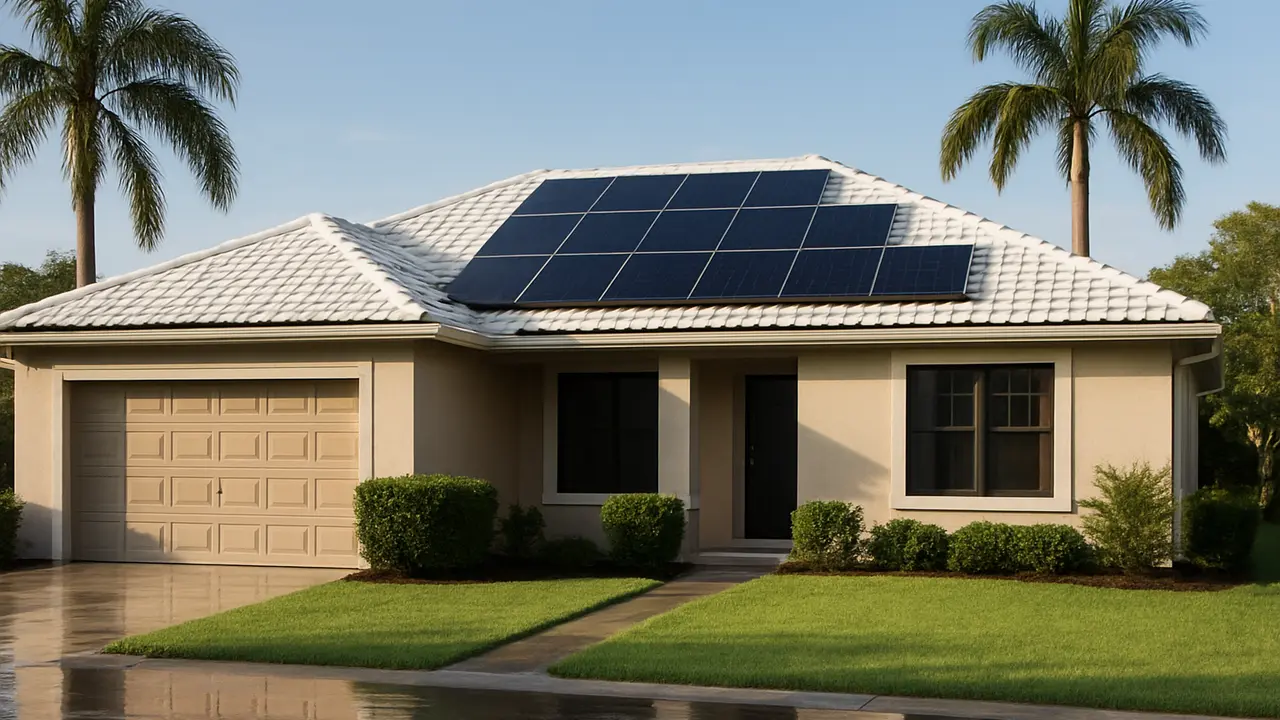
Solar panels in Florida still benefit from true monthly net metering in 2026. Exports offset what you buy at the retail rate, solar is exempt from sales tax and property tax assessments, and HOAs cannot ban panels. The catch is hurricanes: solar alone does not keep your lights on when the grid fails.
Florida's investor-owned utilities credit each kWh you export against the kWh you use the following month, under Florida Public Service Commission (PSC) Rule 25-6.065. Credits roll forward for up to 12 months. Once a year, the utility pays you for any unused credits at a much lower as-available energy rate.
The rule, Rule 25-6.065 of the Florida Administrative Code (opens in a new tab), covers investor-owned utilities such as Florida Power & Light (FPL), Duke Energy Florida and Tampa Electric. Its main points:
City-owned utilities and electric co-ops, such as those serving Jacksonville, Orlando and many rural areas, set their own net metering terms. Check your utility's solar page if you are not an FPL, Duke or Tampa Electric customer.
For a broader look at how monthly credits compare with net billing elsewhere, see our net metering explainer.
A 7 kW system near Tampa makes about 10,976 kWh a year. For a home using 13,200 kWh, that covers about 83% of use and saves roughly $1,679 in the first year at Florida's average residential rate. With an example price of $21,000, simple payback is about 11.6 years.
How we built the example:
The result: about $1,679 saved in year one and roughly $57,251 over 25 years, before the system cost.
Now compare an oversized system. A 10 kW system would make about 15,680 kWh, or about 2,480 kWh more than the home uses. Our calculator values that system's first-year savings at only about $2,020, because the surplus does not offset any purchases. In reality the utility pays for that surplus once a year at its low as-available rate, which is a small fraction of retail.
| Yearly output | Home's yearly use | |
|---|---|---|
| 7 kW system | 10,976 kWh | 13,200 kWh |
| 10 kW system | 15,680 kWh | 13,200 kWh |
Source: Worked example: PVWatts Tampa 1,568 kWh per kW per year; net metering under Florida PSC Rule 25-6.065 (as of 2026-10)
| System | Yearly output | Share of 13,200 kWh use | First-year savings (approx.) |
|---|---|---|---|
| 7 kW | 10,976 kWh | 83% | $1,679 |
| 10 kW | 15,680 kWh | 119% | $2,020 plus a small year-end payout |
Run your own bill through the solar savings calculator. Pick Florida to load typical sunshine and rates, and keep the export credit at 100% unless your city utility or co-op uses a different rule.
Solar does not erase every charge. FPL's January 2026 residential rate sheet (opens in a new tab) says customers whose monthly base electric service costs fall below $30 pay a minimum $30 base bill. A well-sized system will usually bring an FPL bill down to that floor in sunny months rather than to zero.
Florida exempts solar energy systems from sales tax and excludes the value solar adds to a home from property tax assessments. Florida has no state personal income tax, so there is no state income tax credit, and the federal 25D credit ended for systems completed after December 31, 2025.
Our solar incentives by state guide shows how Florida's package compares with other sunny states.
No. Florida Statute 163.04 says deed restrictions and covenants may not prohibit or have the effect of prohibiting solar collectors. An HOA may choose the specific roof location only within a south-facing orientation, up to 45 degrees east or west of due south, and only if that does not impair the system.
The exact language in Florida Statute 163.04 (opens in a new tab) lets the association "determine the specific location where solar collectors may be installed on the roof within an orientation to the south or within 45° east or west of due south if such determination does not impair the effective operation of the solar collectors." If you have to go to court over it, the prevailing party recovers costs and reasonable attorney's fees.
How to handle HOA approval:
You need one or the other to keep power on during an outage, because grid-tied solar shuts off when the grid goes down. Florida outages can be large and long: Hurricane Ian left over 2.6 million Florida customers without power in 2022, and Hurricane Milton left 3.4 million without power in 2024.
The numbers come from the EIA's reports on Hurricane Ian (opens in a new tab), which notes some customers were out for over two weeks, and Hurricane Milton (opens in a new tab). This month, Hurricane Isaias made landfall near Destin on October 9, 2026 as a Category 2 storm, and the Florida Division of Emergency Management (opens in a new tab) reported nearly 450,000 outages at its height.
| Customers out at peak (millions) | |
|---|---|
| Milton (2024) | 3.4 |
| Ian (2022) | 2.6 |
| Isaias (Oct 2026) | 0.5 |
Source: U.S. EIA Today in Energy (Ian, Milton); Florida Division of Emergency Management (Isaias) (as of 2026-10)
Because Florida's net metering already credits exports at retail, a battery rarely saves money on the bill. Its value is backup. Here is a rough 10-year comparison using our battery vs generator calculator, with a $14,000 installed battery and a $12,000 standby generator:
| Assumption | Battery | Standby generator |
|---|---|---|
| Installed price | $14,000 | $12,000 |
| Yearly maintenance | $0 in this example | $250 |
| Outage hours per year | 72 | 72, plus 26 hours of self-tests |
| Fuel at 1.5 units/hour and $2.50 per unit | None | about $368 a year |
| 10-year total | $14,000 | about $18,175 |
The battery is cheaper in this example, but the two do different jobs. One battery covers essentials, such as the refrigerator, lights, internet, fans and a medical device, for roughly half a day to a day, longer when panels recharge it in the sun. A standby generator can run central air for days as long as fuel lasts, which matters in a Florida summer. Our home battery backup guide explains how to size backup for the circuits you truly need.
| 10-year total | |
|---|---|
| Home battery | $14,000 |
| Standby generator | $18,175 |
Source: Worked example: battery vs generator calculator ($12,000 generator, $250/yr upkeep, fuel at 1.5 units/hour and $2.50 per unit) (as of 2026-10)
Properly installed panels are engineered for local wind loads, so a well-built system usually survives storms that damage other parts of a home. The Florida Building Code references ASCE 7 wind design, and high-wind counties such as Miami-Dade and Broward also require product approval for racking.
Ask your installer for three documents before work begins:
Also call your homeowners insurance company. Ask whether panels are covered as part of the dwelling, whether your coverage limit should rise, and how your hurricane deductible applies.
Florida Statute 520.23 requires every residential solar sale or lease to include a separate disclosure, in at least 12-point type, that you acknowledge on its own. It must show license numbers, total cost, payment schedule, any tax incentives the price relies on, the basis for savings estimates, and a right to rescind for at least 3 business days.
The disclosure statute (opens in a new tab) also requires the statement that future electric utility rates are estimates only. That matters in 2026, because some sales pitches still use outdated claims. If a quote counts a 30% federal tax credit for a system you will own, it is not using current law.
Watch for other common pitches after a storm season, such as door-to-door offers of "free" hurricane-proof solar or claims that net metering is about to end. Our solar sales red flags guide shows how to spot and report them.
Solar is a strong fit in Florida when your roof faces south, east or west with little shade, your system is sized to your yearly use, and you plan to stay at least as long as the payback period. Add a battery or generator if outages are a bigger worry than the bill.
Before you sign, check these points:
Start with your bills in the solar savings calculator, then compare backup options in the battery vs generator calculator.
Yes. For investor-owned utilities such as FPL, Duke Energy Florida and Tampa Electric, PSC Rule 25-6.065 still credits exports against your next month's use. A 2022 bill that would have phased net metering down was vetoed, and no 2026 law changed it. City utilities and co-ops set their own rules.
Your utility pays you for unused credits once a year at an average rate based on its as-available energy tariff, which is much lower than the retail price. That is why Florida systems are best sized to cover your yearly use, not to produce a large surplus.
Not on their own. Grid-tied systems shut off when the grid goes down so they do not send power onto lines crews are repairing. To keep power on you need a battery with backup wiring or a generator.
No. Florida Statute 193.624 says the just value attributable to a renewable energy source device may not be considered when assessing residential property. The definition covers equipment that collects, stores or uses solar energy.
No. Florida Statute 212.08(7)(hh) exempts solar energy systems and their components. The Florida Solar Energy Center certifies the list of equipment that counts, so ask your installer to confirm each item is covered.
No, it cannot prohibit them. Florida Statute 163.04 lets an HOA pick the specific roof location only within an orientation facing south or within 45 degrees east or west of due south, and only if that choice does not impair the system's effective operation.
Properly installed systems are designed for local wind loads under the Florida Building Code, which references ASCE 7. In Miami-Dade and Broward, racking also needs product approval for high-velocity hurricane zones. Ask your installer for the engineering letter and the product approval numbers.
It depends on what you need to run and for how long. In our example with 72 outage hours a year, a $12,000 standby generator costs about $18,175 over 10 years versus $14,000 for a battery, but a generator can run central air for days while one battery covers essentials. Many Florida homes choose a battery for essentials and quiet daily use, or a generator for whole-home coverage.
Florida Statute 520.23 requires a separate disclosure in at least 12-point type with license numbers, total cost, payment schedule, assumptions behind savings estimates, and a right to rescind for at least 3 business days. It must also say future utility rates are estimates only.
What is net metering? Learn how utilities credit the solar power you export, how net billing differs, and how much each rule is worth on a typical home.
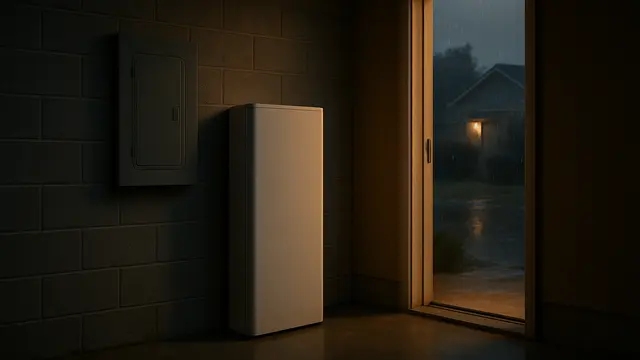
Home battery backup explained: why solar alone shuts off in an outage, how long a 13.5 kWh battery lasts, what it can run, safety codes and 2026 costs.

Solar incentives by state for 2026: state tax credits, property tax exemptions, rebates, SRECs and the export rules that matter most now that 25D is gone.

Spot solar scams before you sign: fake free-solar offers, expired tax credit pitches, hidden dealer fees and pressure tactics. A 2026 checklist.