
Are Solar Panels Worth It? A 2026 Reality Check Without the Tax Credit
Are solar panels worth it in 2026 now the 30% tax credit is gone? See real payback math by state, the export credit effect and when solar doesn't pay.
How long do solar panels last? Most run 25 to 35 years, losing about 0.5% to 0.75% of output a year. See what wears out first and how to plan for it.
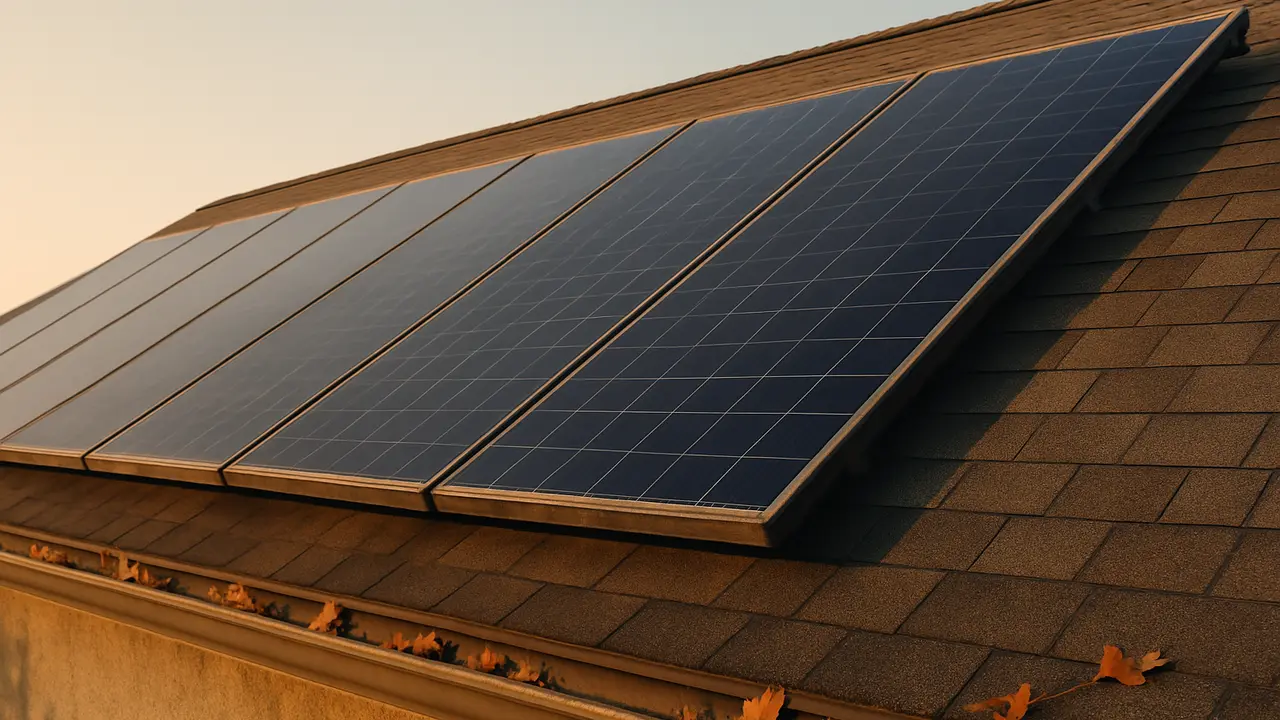
How long do solar panels last? Most panels installed today are expected to produce power for 25 to 35 years. They rarely stop all at once. Instead, they lose a small share of output each year, about 0.5% to 0.75% on average, so a well-installed system still makes most of its original power decades later.
The panels are usually the longest-lived part of the system. The inverter, the roof underneath, the wiring and any battery tend to need attention first. This guide covers how long each part lasts, how much output you lose over time and how to plan the costs so your savings keep coming.
Expected panel life is now 25 to 35 years. The Department of Energy reports that a Berkeley Lab survey of US solar professionals found the average expected operating life rose from about 20 years in 2007 to 25 to 35 years in 2025. Most US systems are still young, so long-term field data keeps growing.
The DOE's end-of-life management page (opens in a new tab) also notes that most installed systems are early in their working lives. That matters for buyers: the 25-year figure isn't a wall where panels die. It is roughly the period most manufacturers and financial models plan around.
Two things shorten real-world life more than age itself: weather damage and installation errors. The DOE names both as factors expected to speed up end-of-life issues. A careful installer and sound roof attachments do more for lifespan than any brand choice.
Expect about 0.5% to 0.75% a year. A DOE-funded study of hundreds of US systems found a median performance loss of about 0.75% a year. An earlier NREL review of roughly 2,000 measurements found a median near 0.5%. Either way, a 25-year-old system still makes well over 80% of its first-year output.
The DOE summary of its PV Fleet study (opens in a new tab) calls the 0.75% figure the first degradation estimate representative of the whole US fleet. NREL's 2012 analytical review (opens in a new tab) of published field data put the median at about 0.5% a year, with a mean near 0.8% pulled up by a minority of poor performers. Climate matters too: panels in cooler places generally degrade more slowly.
Here is what those rates mean for a 7.7 kW system, the median 2025 residential size in Berkeley Lab's 2026 data update (opens in a new tab), producing 1,350 kWh per kW in year one (10,395 kWh). We computed each row with the same formula our calculators use.
| Yearly loss | Output in year 25 | Share of year-1 output | Share in year 30 | Total kWh over 25 years | Total kWh over 30 years |
|---|---|---|---|---|---|
| 0.5% | 9,217 kWh | 88.7% | 86.5% | 244,864 kWh | 290,261 kWh |
| 0.75% | 8,677 kWh | 83.5% | 80.4% | 237,777 kWh | 280,195 kWh |
The gap between the two rates is only about 7,000 kWh over 25 years, less than one year of production. Degradation is real, but it is a slow leak, not a cliff. You can test your own system size and sunshine below.
Panels usually outlast everything around them. The inverter is the most common major replacement because it is power electronics that heat up every sunny day. Roof work, wiring connections, monitoring hardware and batteries are the other parts that may need money before the panels are done.
String inverters sit on a wall and convert the panels' DC power to AC for your home. Microinverters and optimizers do part of that job on the roof, one per panel. Both are electronic, so they age faster than glass and silicon. Plan for the possibility of at least one inverter replacement during a 25 to 35 year panel life, and read the inverter warranty separately from the panel warranty.
Panels are bolted through or clamped to your roof, so the roof's life sets a practical limit. If shingles have 8 years left and panels have 30, you will pay to remove and reinstall the array mid-life. The DOE's homeowner's guide (opens in a new tab) tells buyers to consider the age of their roof and how long until it needs replacement.
Home batteries age with both time and cycling. Their warranties usually promise a share of original capacity after a set number of years or a set amount of energy delivered, whichever comes first. If you add storage, compare that warranty with your plans. Our guide to whether solar batteries are worth it covers how warranty terms affect battery payback.
Loose or corroded connectors can cut output or create safety problems. Monitoring gateways and cellular modules can also go out of date. These are usually inexpensive fixes, but only if someone notices. A monitoring app that you actually check is your early-warning system.
Most panel packages include a product warranty against defects, a performance warranty that promises a minimum share of rated output after a set number of years, and a separate inverter warranty. The installer's workmanship warranty covers roof penetrations and wiring. Each has its own length and claim process.
Ask for each warranty in writing before you sign, and check who stands behind it. A manufacturer warranty is only as good as the company's ability to honor it, and a workmanship warranty depends on the installer staying in business. Some installers back their work with third-party coverage; ask whether yours does.
The Treasury Department's consumer advisory on buying solar (opens in a new tab) makes a sharp point for financed systems: find out how long the panel warranty lasts and whether you can pay off the loan while the panels are still covered. A 25-year loan on equipment with shorter coverage on key parts leaves you paying for repairs and the loan at the same time.
Compare coverage across quotes as carefully as price. Our guide on how to choose a solar installer includes a list of warranty questions to ask each company.
Yes. Payback is the same whether panels last 20 years or 35, but every year after payback is mostly profit. In our example, a system that pays back in about 11 years comes out about $23,100 ahead after 20 years, $38,800 after 25 and $56,700 after 30.
We used the defaults of our solar payback calculator: a $23,100 cash price (7.7 kW at $3.00 per watt), $1,890 of first-year savings, 3% yearly electricity price increases, 0.5% yearly panel loss and $100 a year for upkeep. As of October 2026, there is no federal 25D credit for a system you own that is installed in 2026, so the example assumes none.
| How long the system runs | Payback | Net gain at the end |
|---|---|---|
| 20 years | 11.3 years | $23,107 |
| 25 years | 11.3 years | $38,833 |
| 30 years | 11.3 years | $56,678 |
Another way to see lifespan is cost per kWh. Over 25 years at 0.5% loss, the same $23,100 system makes about 244,900 kWh, or about 9.4 cents per kWh. Stretch that to 30 years and the cost drops to about 8.0 cents. Add a $3,000 inverter replacement and the 25-year figure rises to about 10.7 cents, still well below the US average residential price of 18.19 cents for January through July 2026 reported by the EIA.
Sunnier homes do better. At 1,755 kWh per kW, the PVWatts estimate for Phoenix from the PVWatts calculator (opens in a new tab), the same system costs about 7.3 cents per kWh over 25 years. For the full picture of whether the numbers work for you, see our guide to whether solar panels are worth it.
Most of a system's lifespan is decided on install day: good attachments, a sound roof, correct wiring and a sensible layout. After that, the job is mostly watching. Check production monthly, keep shade under control, and call the installer when output drops more than seasons explain.
Follow these steps over the life of the system:
Most owners keep panels running until the output or a repair bill no longer makes sense, then remove them. Recycling methods exist for common silicon and cadmium telluride panels, and the US has facilities that accept them. Recycling usually costs more than landfill disposal today, according to the DOE.
The DOE expects end-of-life volumes to grow over the next few decades. It cites an International Renewable Energy Agency estimate that cumulative US solar panel waste could reach 0.17 to 1 million tons by 2030, which is small next to the roughly 200 million tons of solid waste the EPA estimates the US generates each year. Some owners choose to replace working panels early with more efficient ones, which the industry calls repowering.
Before you sign, ask how the installer would handle removal at the end of the system's life, or during a future re-roof. With a lease or PPA, end-of-term removal should be spelled out in the contract.
Start with first-year production for your roof, then reduce it by about 0.5% to 0.75% a year. NREL's PVWatts model estimates year-one output from your location, tilt and orientation. Multiply by the years you expect to own the home to see the lifetime kWh you are buying.
PVWatts uses a default 14% system loss that covers soiling, shading, wiring, mismatch, light-induced degradation and availability, with 0% for age. That is why year-one estimates should be lowered over time for degradation. Our solar panel output calculator does the same, including a 25-year total.
Orientation affects lifetime output as much as degradation does. The DOE says south-facing roofs with a slope between 15 and 40 degrees generally perform best. If your roof is shallow, steep, or faces east or west, check it with our solar panel angle calculator, and see how many panels fit with the roof calculator. To see what a system of that size should cost, read our guide to how much solar panels cost.
Most panels sold today are expected to work for 25 to 35 years. The Department of Energy cites a Berkeley Lab survey of industry professionals showing expected lifespans rose from about 20 years in 2007 to 25 to 35 years in 2025. Panels don't usually stop suddenly; they make a little less power each year.
A typical loss is about 0.5% to 0.75% of output per year. A DOE-funded study of hundreds of US systems found a median performance loss of about 0.75% per year, and an earlier NREL review of about 2,000 measurements found a median near 0.5%. Hot climates and poor installation can push losses higher.
They usually keep producing, just at a lower level. At a 0.75% yearly loss, a system makes about 83% of its original output in year 25. Many owners keep using them until production or a repair bill no longer justifies it, then remove or replace them.
The inverter is usually the first major component to need replacing, because it is electronic and runs hot every day. Microinverters and power optimizers sit on the roof and can fail one at a time. Check each part's warranty in writing, since inverter coverage is often shorter than panel coverage.
They need little. Most owners only watch their monitoring app, keep trees trimmed and have an installer check wiring and mounts if output drops. Rain cleans most panels; in dusty, dry areas occasional rinsing can help. Never pressure-wash panels or walk on them.
If your roof will need replacing within the next decade, it usually makes sense to do it first. Removing and reinstalling panels later adds labor and permit costs. The Department of Energy's homeowner guide advises considering how long your roof has left before you go solar.
Yes. Every year past payback is mostly profit. In our example, a $23,100 system with $1,890 of first-year savings is about $38,800 ahead after 25 years and about $56,700 ahead after 30 years, assuming 3% yearly rate increases and $100 a year of upkeep.
Yes, recycling processes exist for common panel types, and the US has facilities that accept them. The Department of Energy notes that recycling usually still costs more than landfill disposal. Ask your installer how it handles old panels and check your state's rules.
Are solar panels worth it in 2026 now the 30% tax credit is gone? See real payback math by state, the export credit effect and when solar doesn't pay.
How much do solar panels cost in 2026? Real installed prices per watt from Berkeley Lab, costs by system size, battery add-ons, and why no federal credit now.
How to choose a solar installer in 2026: check licenses and NABCEP certification, compare quotes per watt, read warranties and spot pressure tactics.
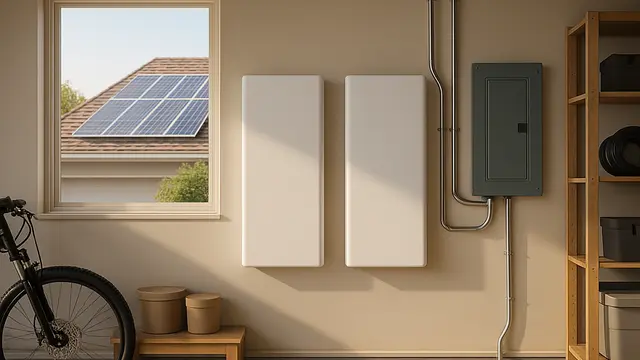
Are solar batteries worth it? See 2026 battery costs, when time-of-use savings and backup pay off, and why the answer differs in CA, AZ and TX.