
How Much Do Solar Panels Cost? 2026 Prices by System Size
How much do solar panels cost in 2026? Real installed prices per watt from Berkeley Lab, costs by system size, battery add-ons, and why no federal credit now.
Estimate what a home solar system costs in 2026, with or without a battery, before and after rebates. Enter the system size and price per watt from a quote, or use the defaults to see a typical price.
Results update as you type. Without JavaScript you see the worked example below.
A solar panel cost calculator multiplies your system's watts by the installed price per watt, adds any battery and subtracts rebates. With the defaults, a 7.7 kW system at $3.00 per watt costs $23,100 before and after incentives, because the federal 25D credit no longer applies to systems completed in 2026.
The results show your net cost, the solar and total price, the federal credit and net cost per watt, plus a donut chart splitting what you pay into the solar system, the battery and rebates or credits. A scenario table compares solar only, solar plus a battery (your battery figure, or $16,000 if you left it at 0), and the same system with a quote $0.50 per watt lower.
Solar price      = system kW × 1,000 × price per watt
Total price      = solar price + battery price
Federal credit   = total price × credit % (0% or 30%)
Net cost         = total price − rebates − federal credit (never below $0)
Net cost per watt = net cost ÷ (system kW × 1,000)
Assumptions that match the code:
Default inputs: 7.7 kW, $3.00 per watt, no battery, $0 rebates, no federal credit.
With these defaults the scenario table shows $23,100 for solar only, $39,100 with a $16,000 battery, and $19,250 for a quote $0.50 per watt lower.
Second example, solar plus battery at the national median price: 7.7 kW at $3.60 per watt, a $16,000 installed battery and a $1,000 utility rebate.
| Benchmark (2025 installs) | Price per watt | 7.7 kW system |
|---|---|---|
| Cash purchase median | $3.00 | $23,100 |
| All host-owned median | $3.60 | $27,720 |
| Loan-financed median (includes dealer fees) | $4.50 | $34,650 |
| Solar plus storage median (per PV watt) | $4.90 | $37,730 |
Medians are from LBNL's 2026 data update as read from its charts; your local market may be higher or lower.
Net cost is the number to compare with savings. Plug it into the solar payback calculator along with first-year savings to see break-even. If you have several bids, the solar cost per watt calculator lines them up side by side.
A quote well above $4 per watt for a simple roof deserves questions. Our guide to how much solar panels cost explains what pushes prices up, and are solar batteries worth it helps you decide whether the battery line belongs in the quote.
This is an educational estimate, not a quote. Real prices depend on your roof, electrical panel, equipment, permits, local labor and the installer's margin. Get several written bids, as the FTC (opens in a new tab) recommends, and confirm tax questions with a tax professional.
With the defaults, a 7.7 kW system at $3.00 per watt costs $23,100 before incentives. LBNL's 2026 data update reports a 2025 median of about $3.60 per watt across host-owned home systems, or roughly $27,700 for the same size, with cash deals near $3.00 and loan-financed deals near $4.50 because loan prices include dealer fees.
Only if installation was completed by December 31, 2025. As of October 2026, the 25D Residential Clean Energy Credit does not apply to expenditures made after that date, and the IRS counts an expenditure as made when installation is completed. That is why the calculator's federal credit field defaults to none.
LBNL found cash-purchased solar-plus-storage systems ran about $2.10 per watt of PV above solar alone in 2025, which is about $16,000 on a 7.7 kW system. That is the battery figure the scenario table uses when you have not entered one. The median home battery installed in 2025 was 13.5 kWh.
As a reference, LBNL reports a 2025 median of about $3.00 per watt for cash purchases and $3.60 for all host-owned systems, and about 60 percent of large installers had medians under $4 per watt. Prices vary by state, roof and equipment, so compare at least three written quotes on the same basis.
Many solar loans include a dealer fee that the installer pays the lender and builds into the price. CFPB found these fees typically run 10 to 30 percent of the cash price and can exceed 50 percent. Always ask for the cash price and compare it with the financed amount.
A full installed quote usually does, since soft costs such as labor, permitting, sales and overhead plus balance-of-system make up about 80 percent of the price according to LBNL. If a quote lists permits, electrical panel upgrades or roof work separately, add them to the total before dividing by watts.
Count only programs you have confirmed are open for your utility and install date. Many battery and solar rebate budgets close or waitlist; California's SGIP residential budgets were mostly closed or waitlisted as of October 2026. Ask the installer for the program name and check the program's own page.
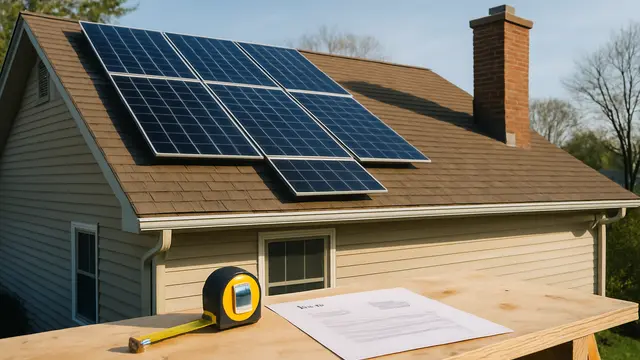
How much do solar panels cost in 2026? Real installed prices per watt from Berkeley Lab, costs by system size, battery add-ons, and why no federal credit now.

Are solar panels worth it in 2026 now the 30% tax credit is gone? See real payback math by state, the export credit effect and when solar doesn't pay.
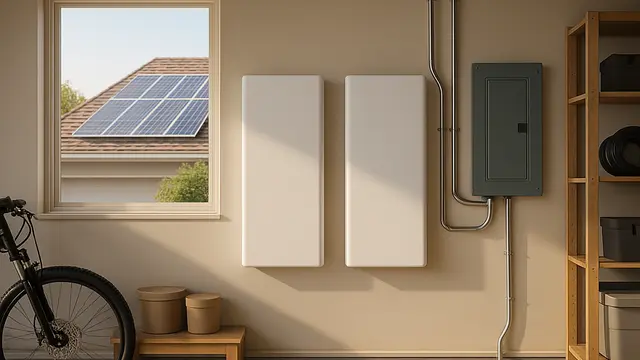
Are solar batteries worth it? See 2026 battery costs, when time-of-use savings and backup pay off, and why the answer differs in CA, AZ and TX.

Spot solar scams before you sign: fake free-solar offers, expired tax credit pitches, hidden dealer fees and pressure tactics. A 2026 checklist.